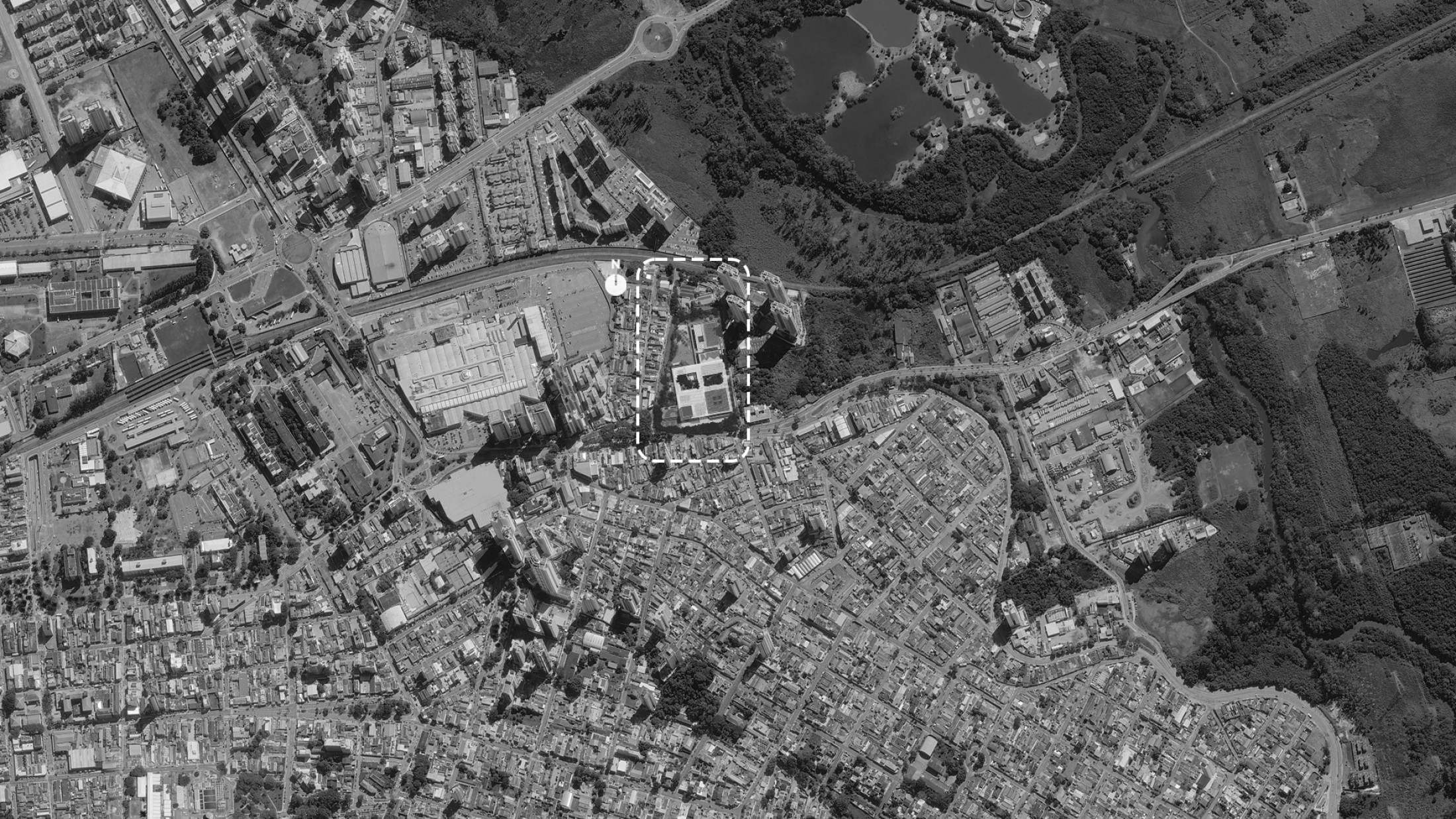
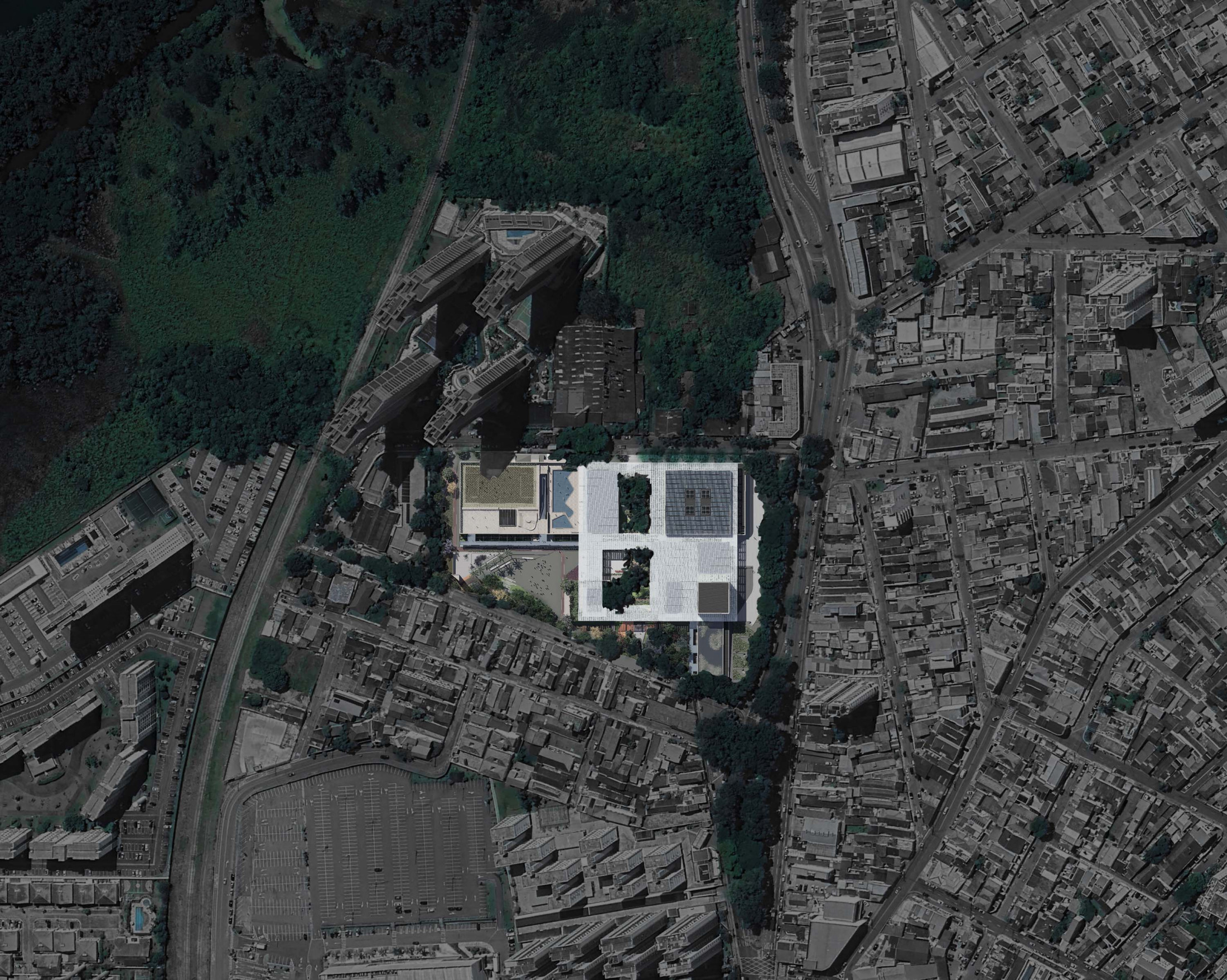
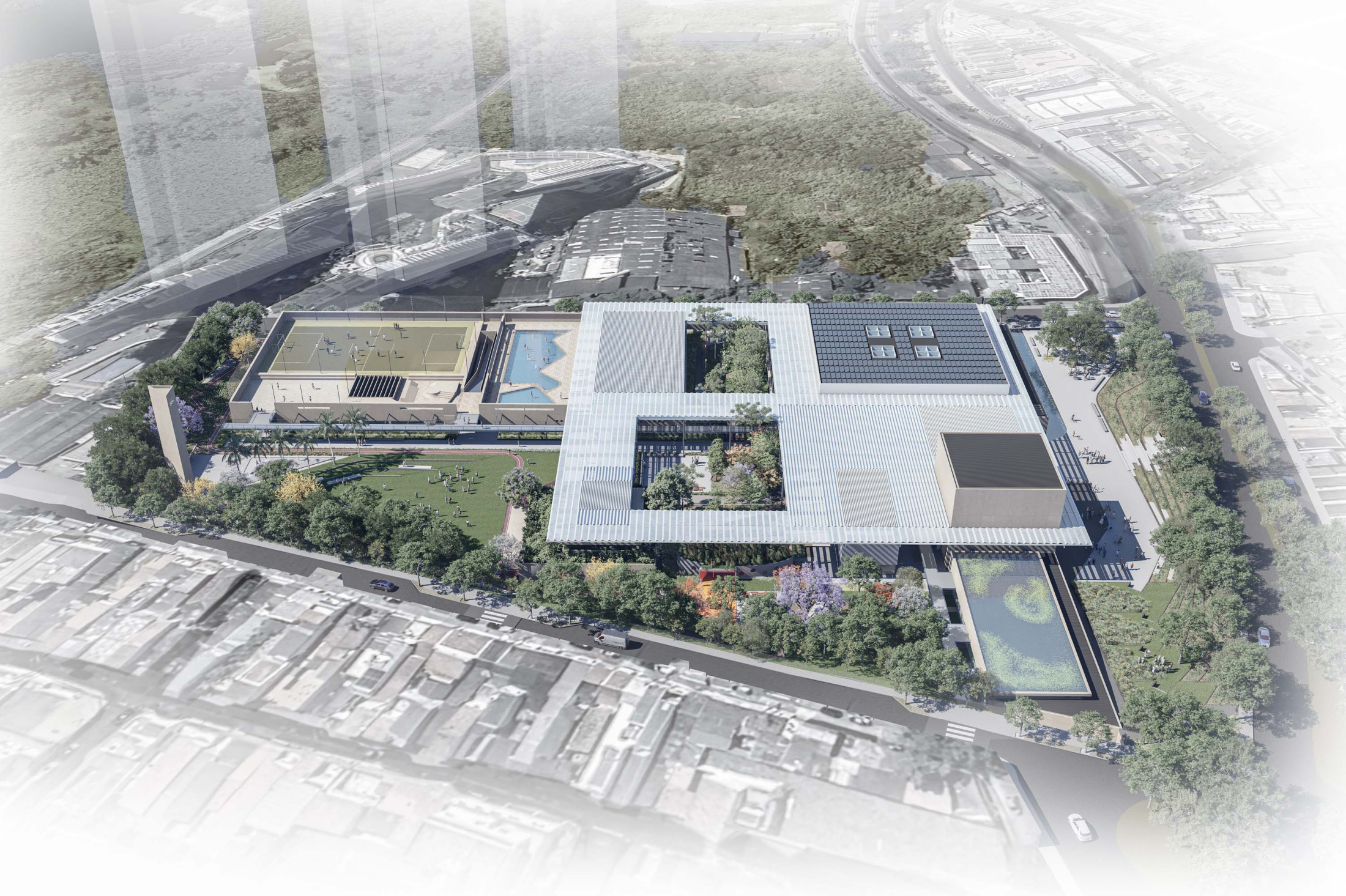
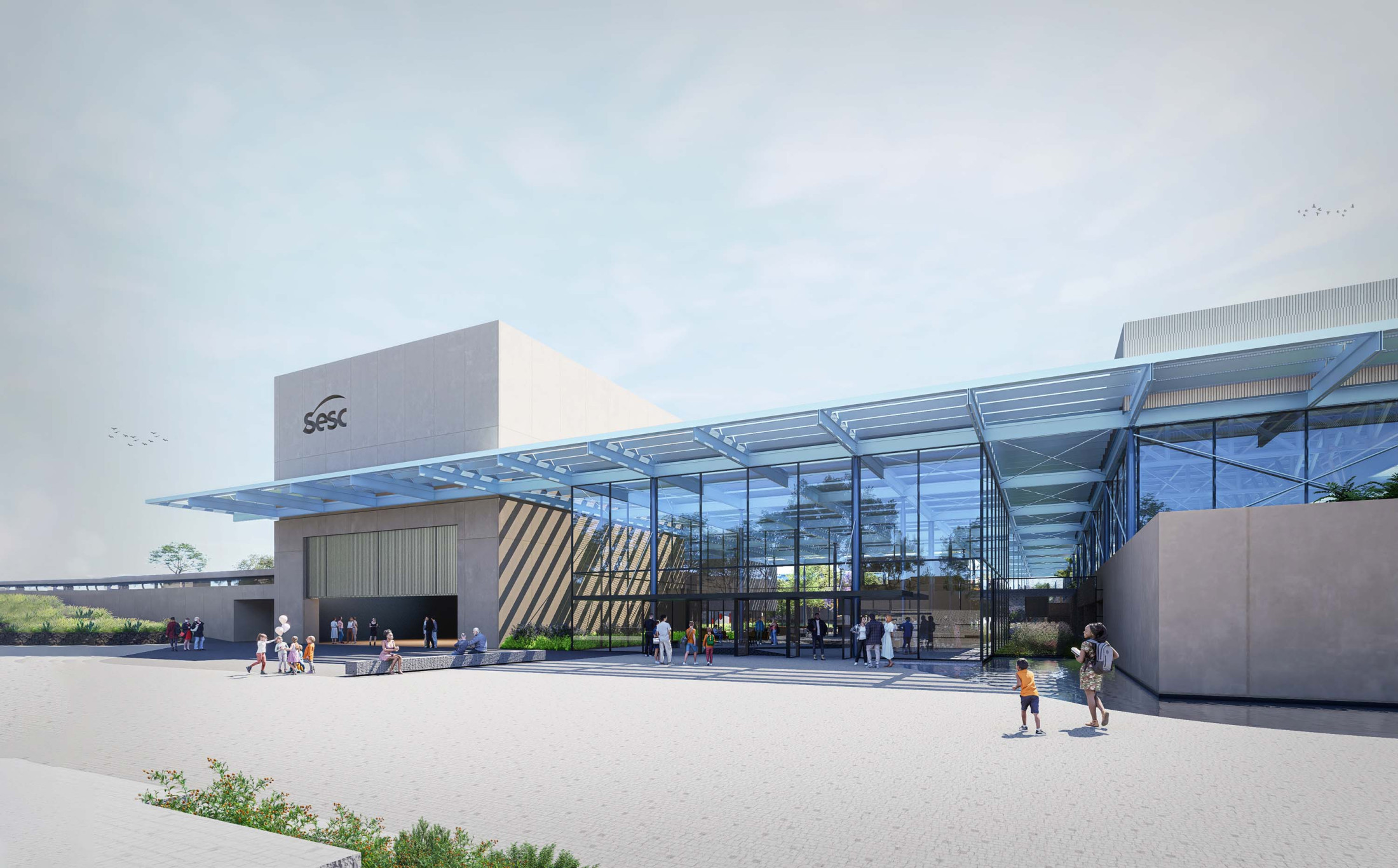
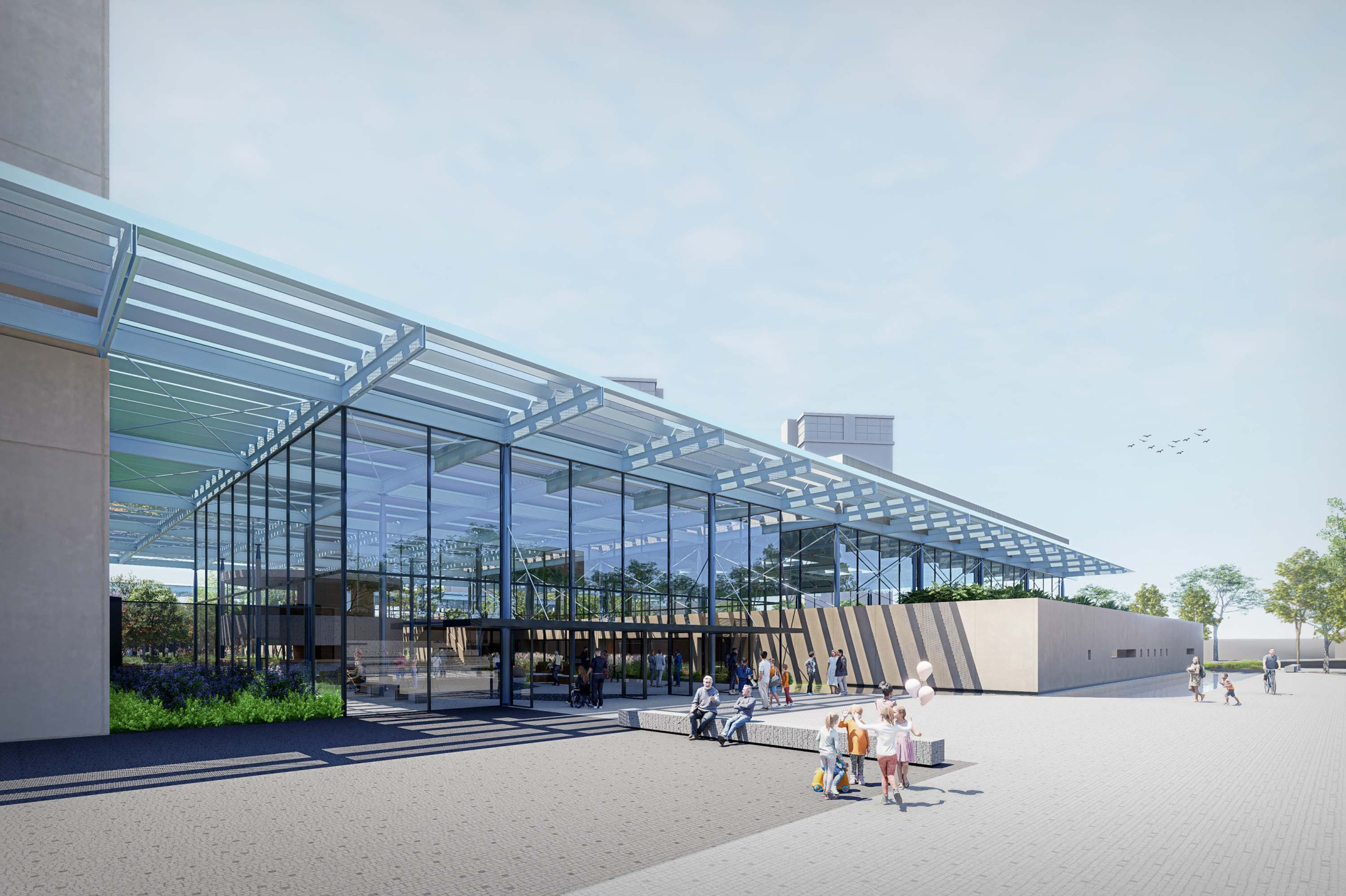
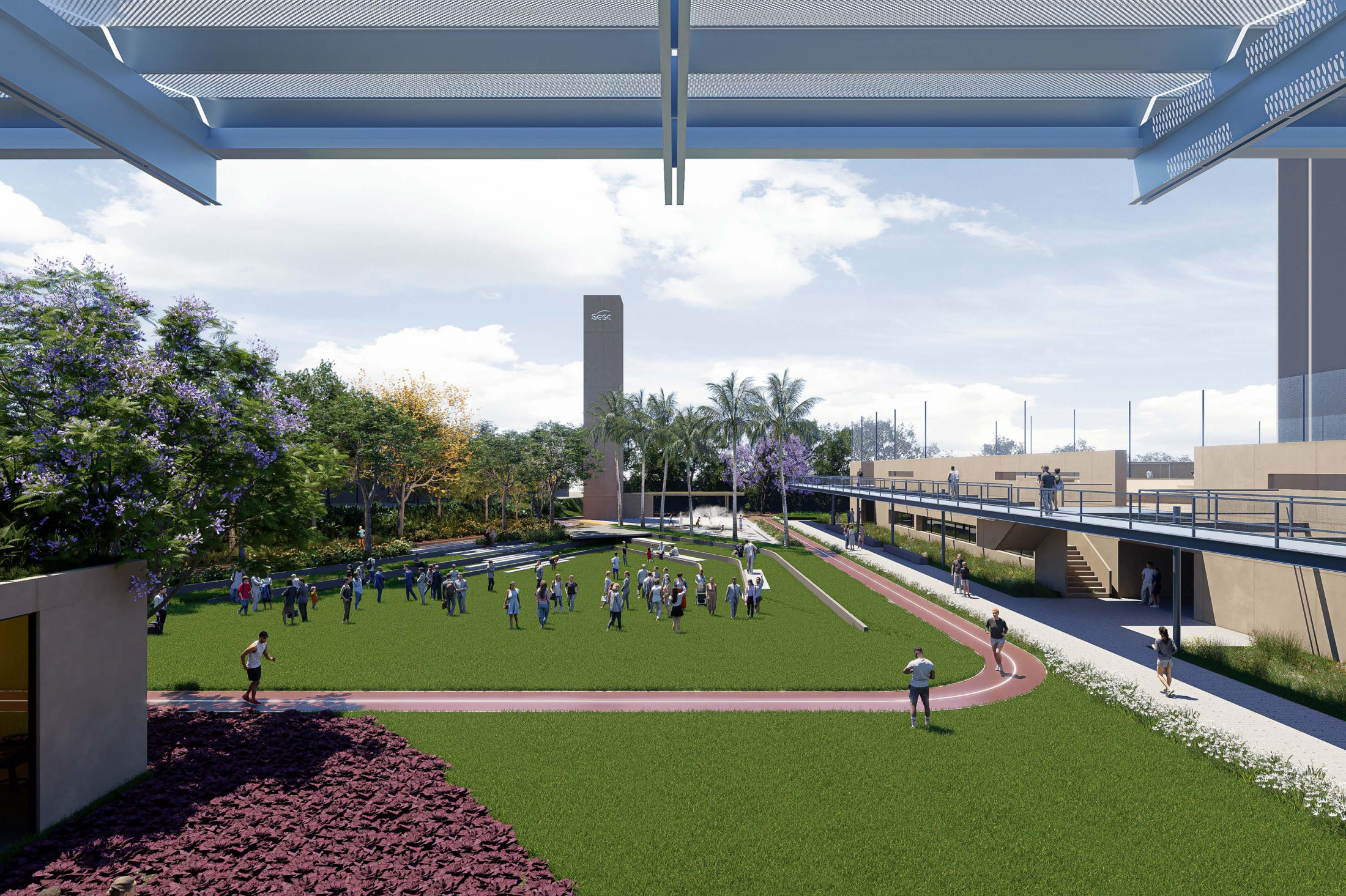
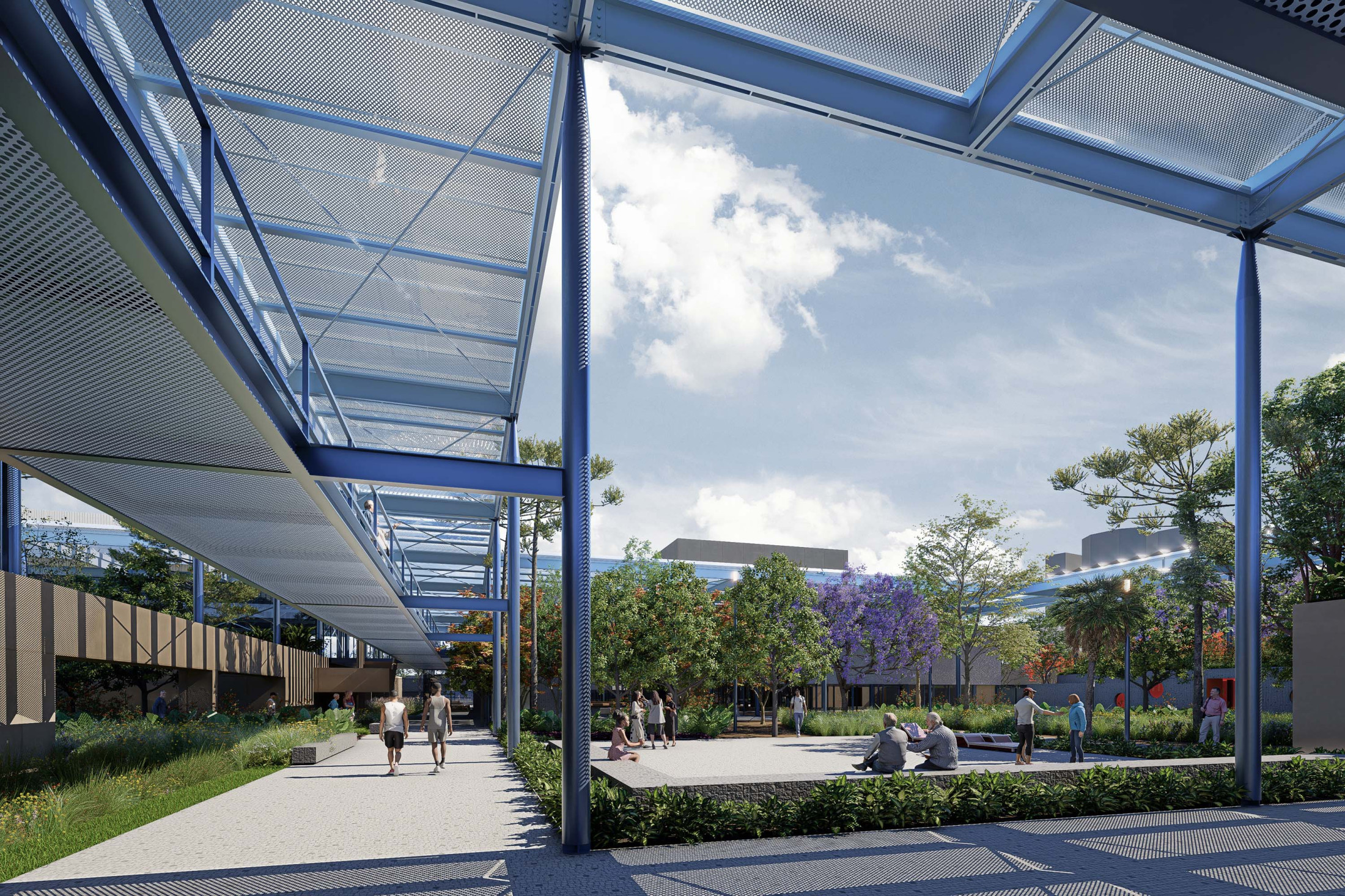
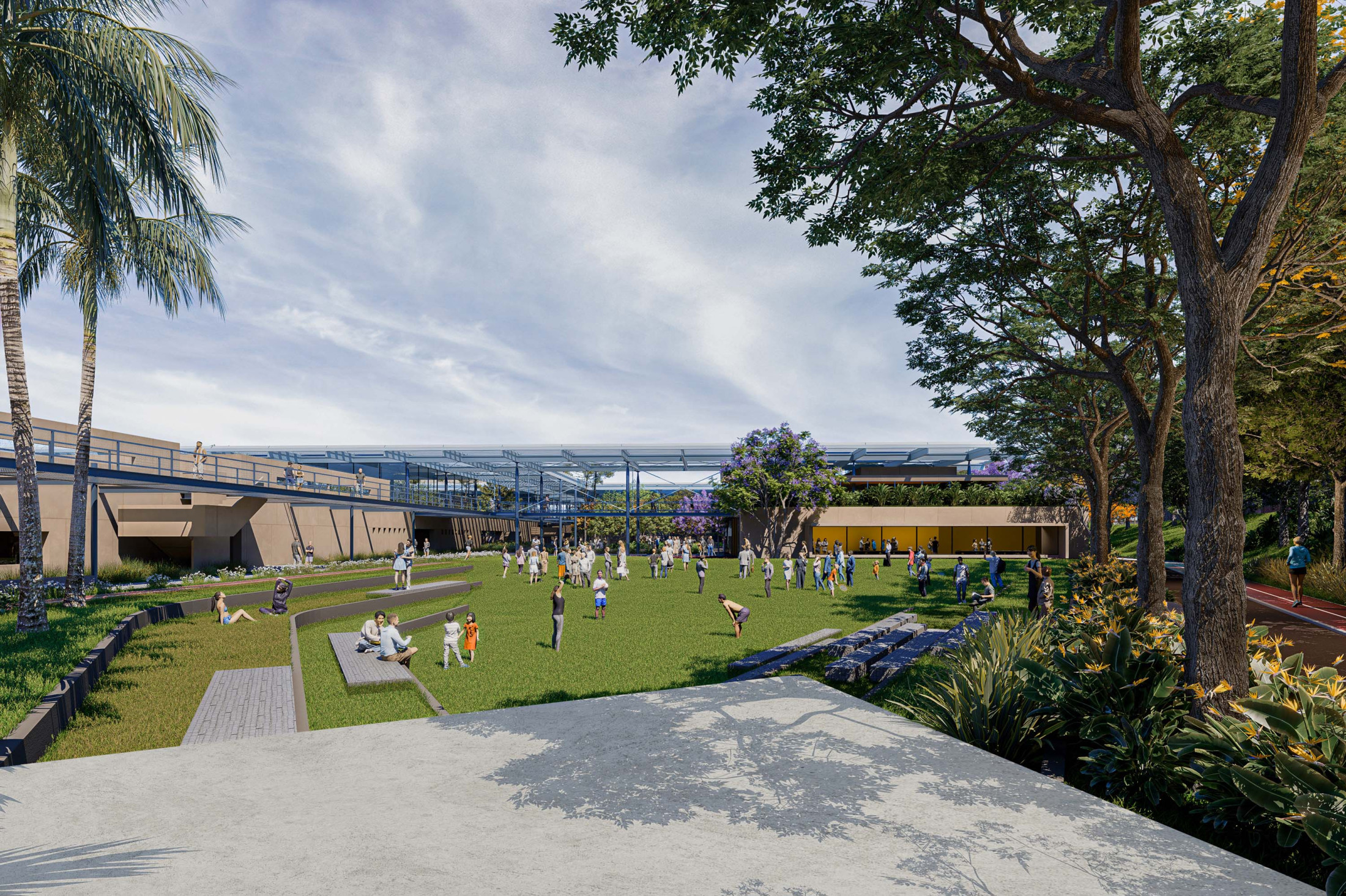
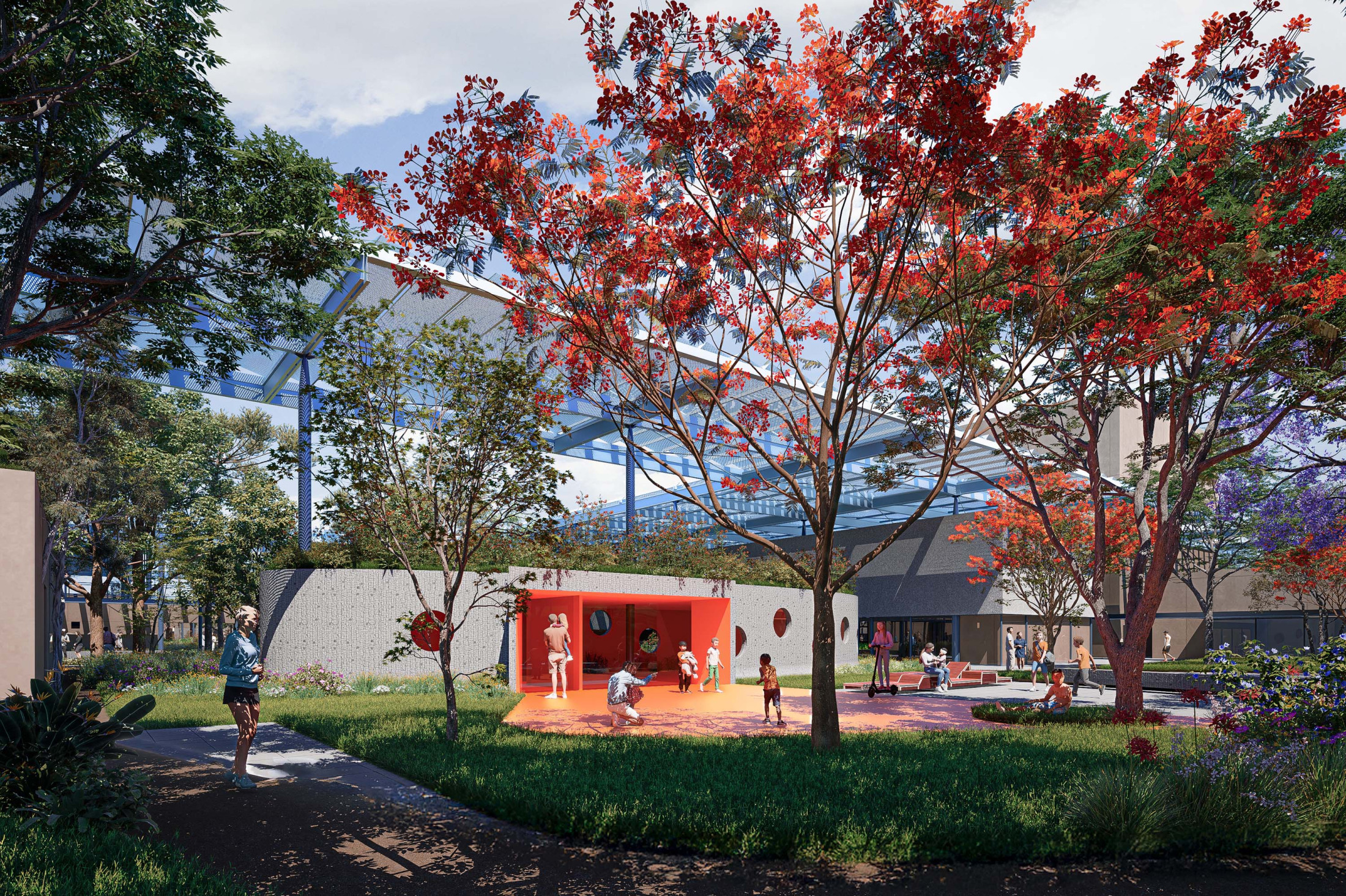
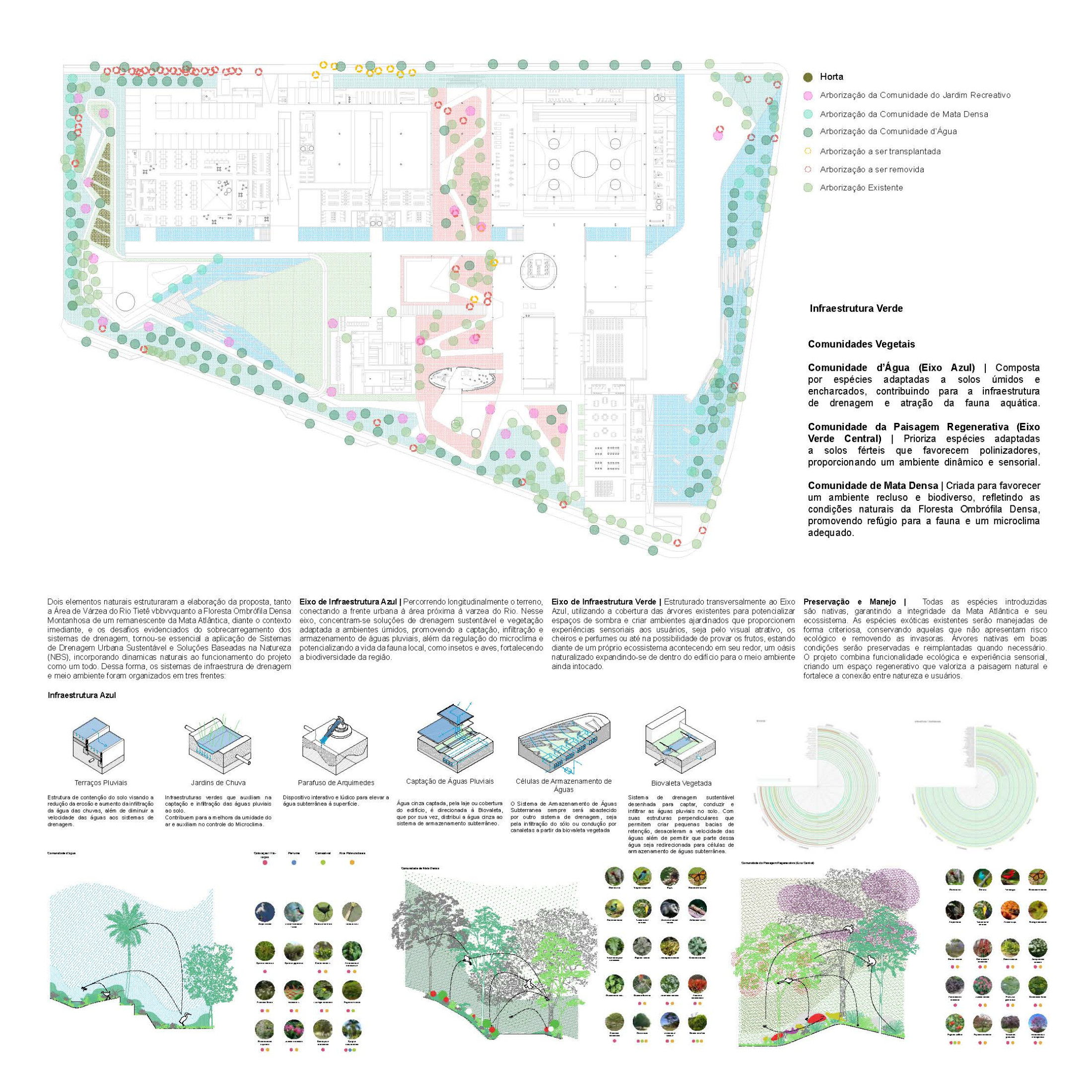
The insertion of the SESC in the Socorro neighborhood and in the city of Mogi das Cruzes aims to promote a dialogue with the urban landscape through collective public spaces that invite the community to appropriate the site. The complex opens to the city through three main plazas: the Green Plaza (transition with elevated levels and leisure area), the Civic Plaza (large civic atrium for cultural activities), and the Neighborhood Plaza (a gathering environment and level access to the center of the complex). With its low height, the project integrates in a balanced manner into the neighborhood, respecting the preservation of greenery and the local landscape.
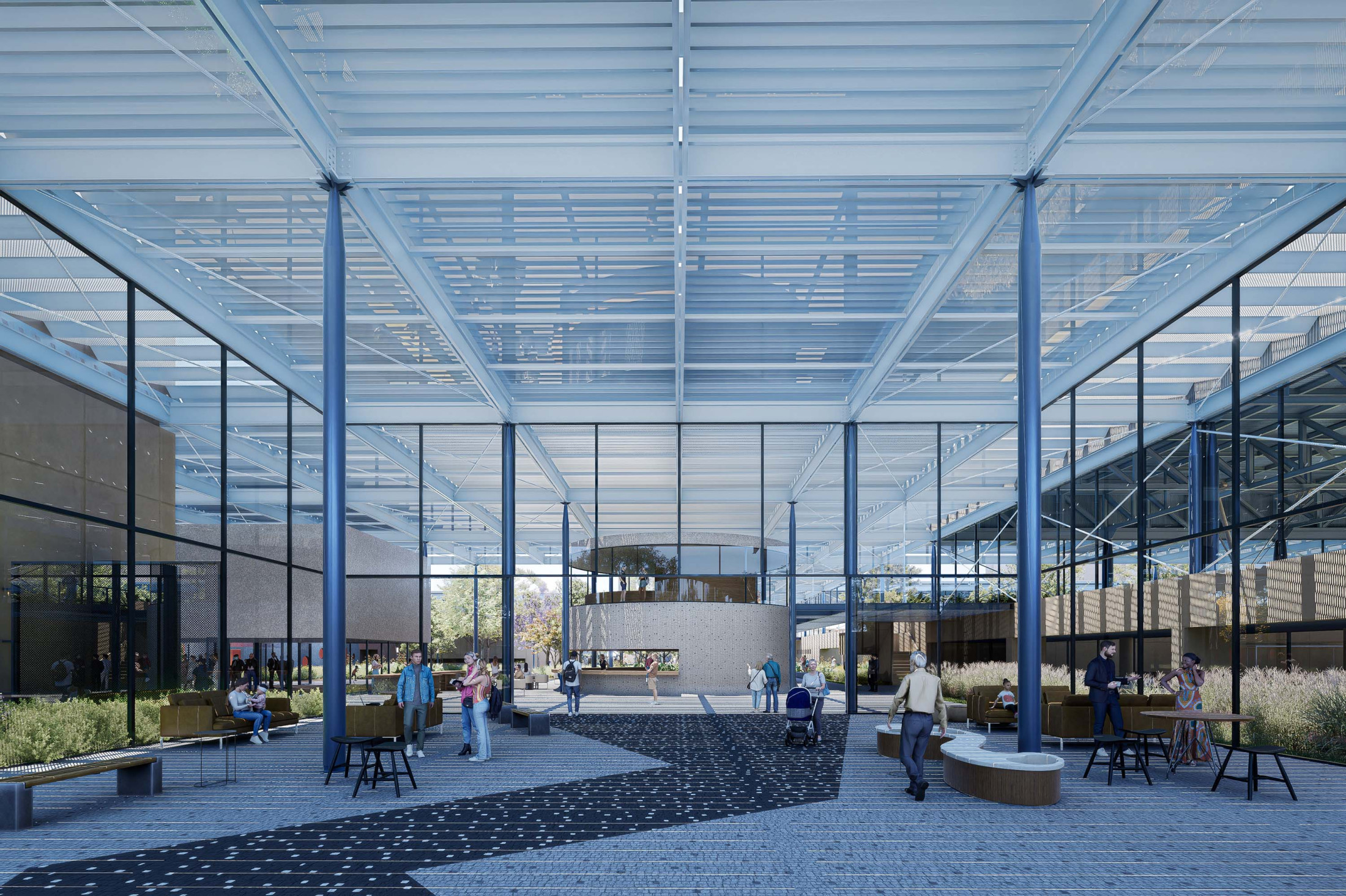
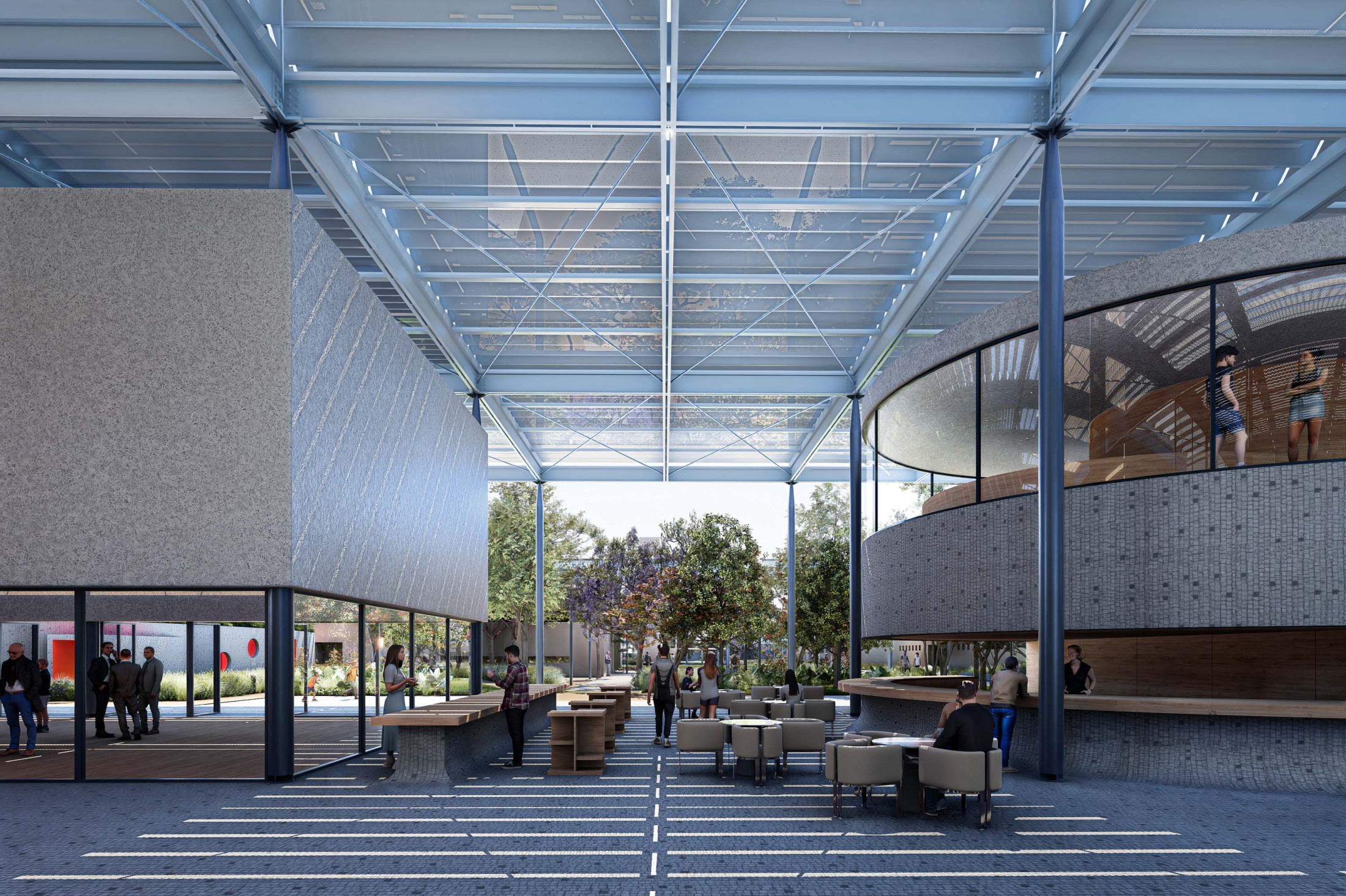
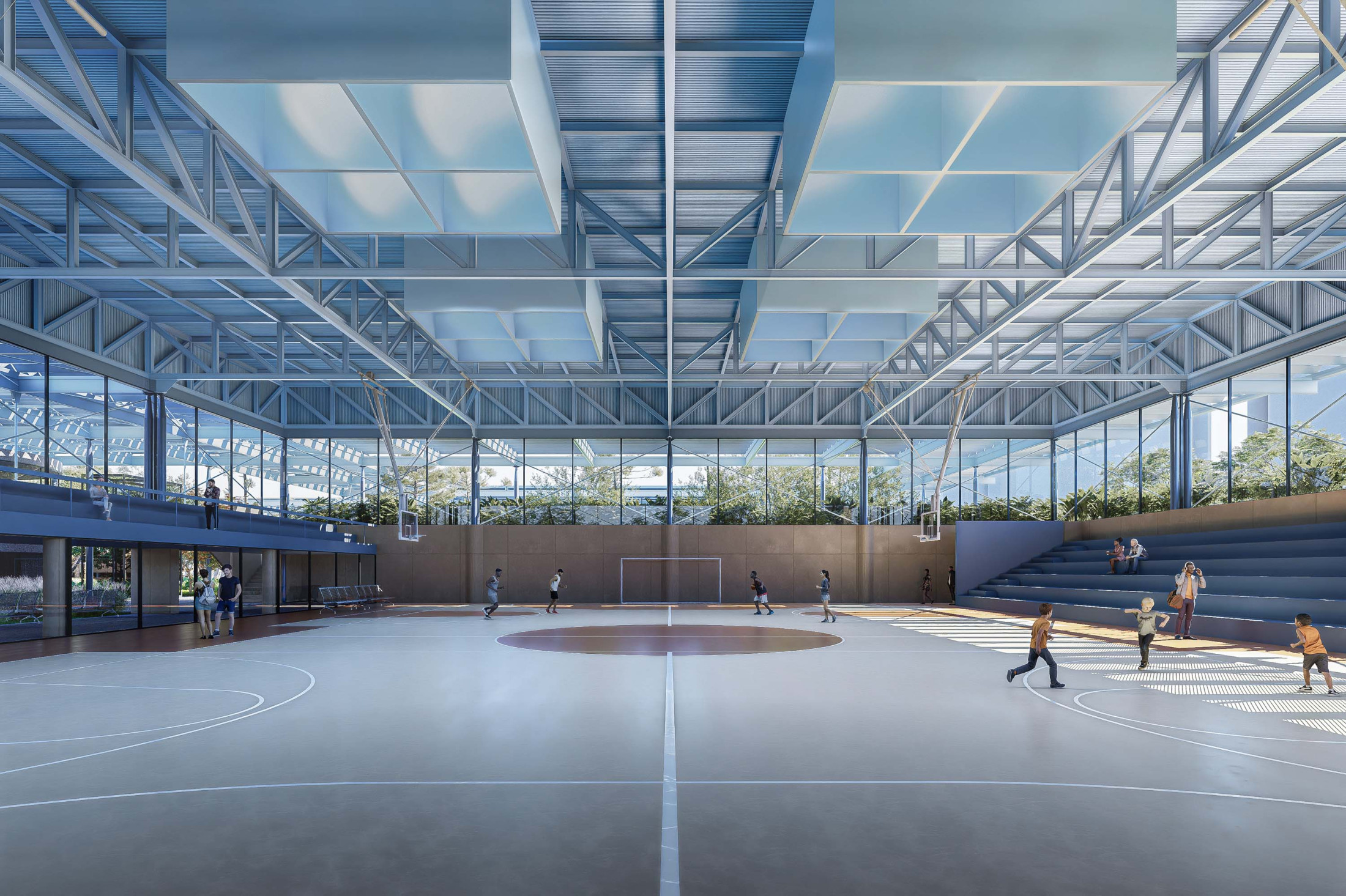
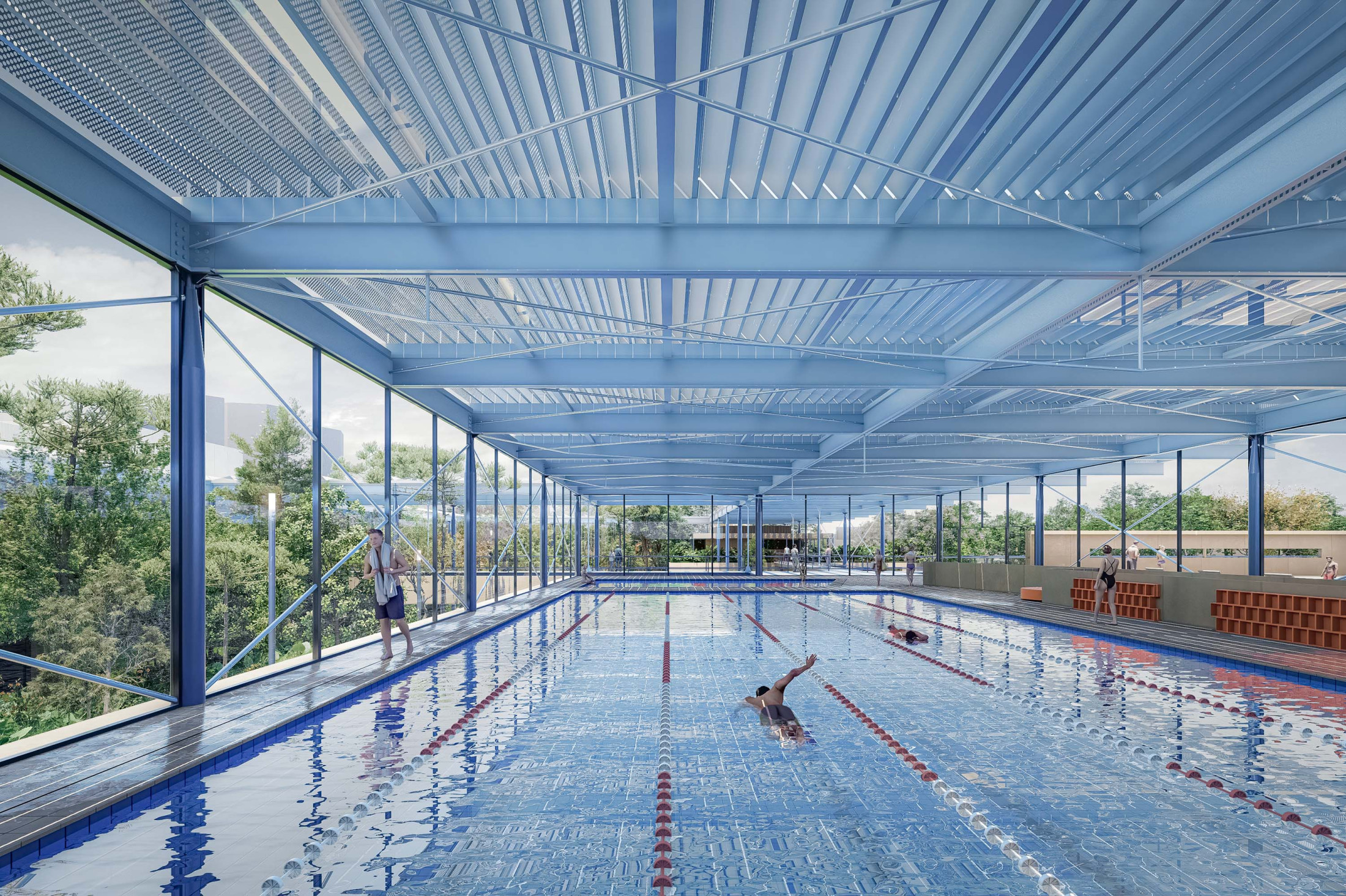
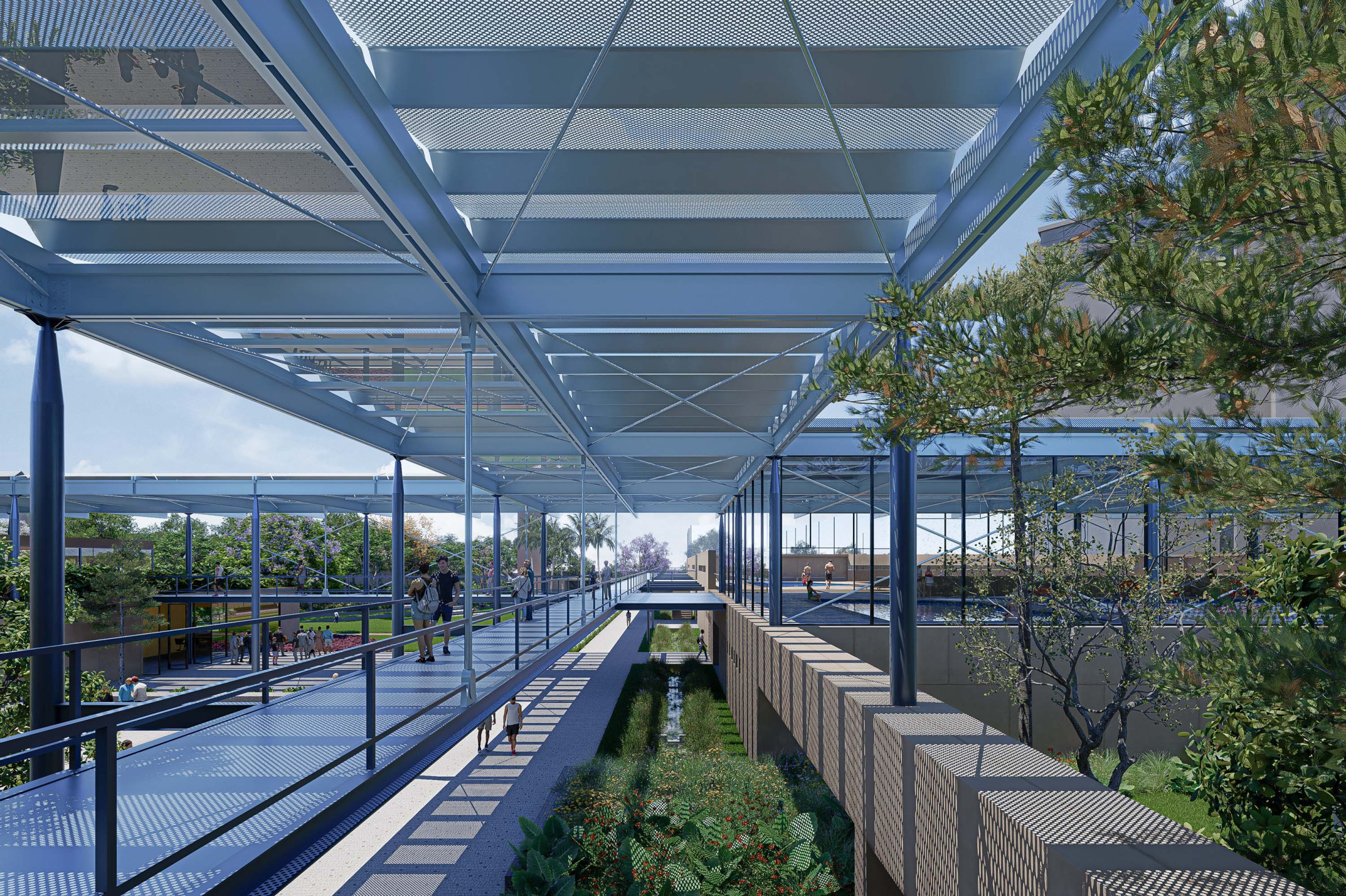
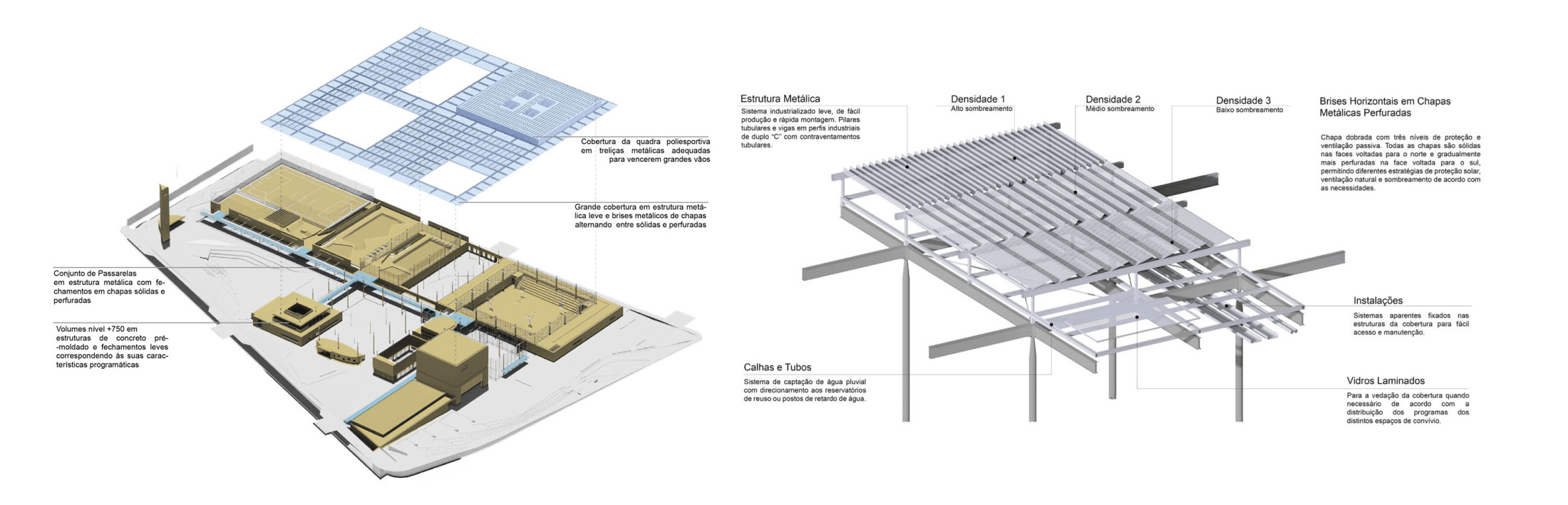
The architecture of the unit was conceived to accommodate diverse functions and activities with a flexible and dynamic spatial structure, defined by a single operational level, with ramps that facilitate access to external sports areas and promote the integration of all spaces. Activities were organized into three distinct sectors: Roof (composed of independent volumes connected by an elevated roof that provides transition between sectors and integrates internal and external spaces, favoring natural lighting and ventilation), Base (housing sports, administrative, and service sectors), and External Areas (composed of plazas and open spaces, promoting outdoor activities and social interaction, ensuring a gradual transition between built and natural environments).
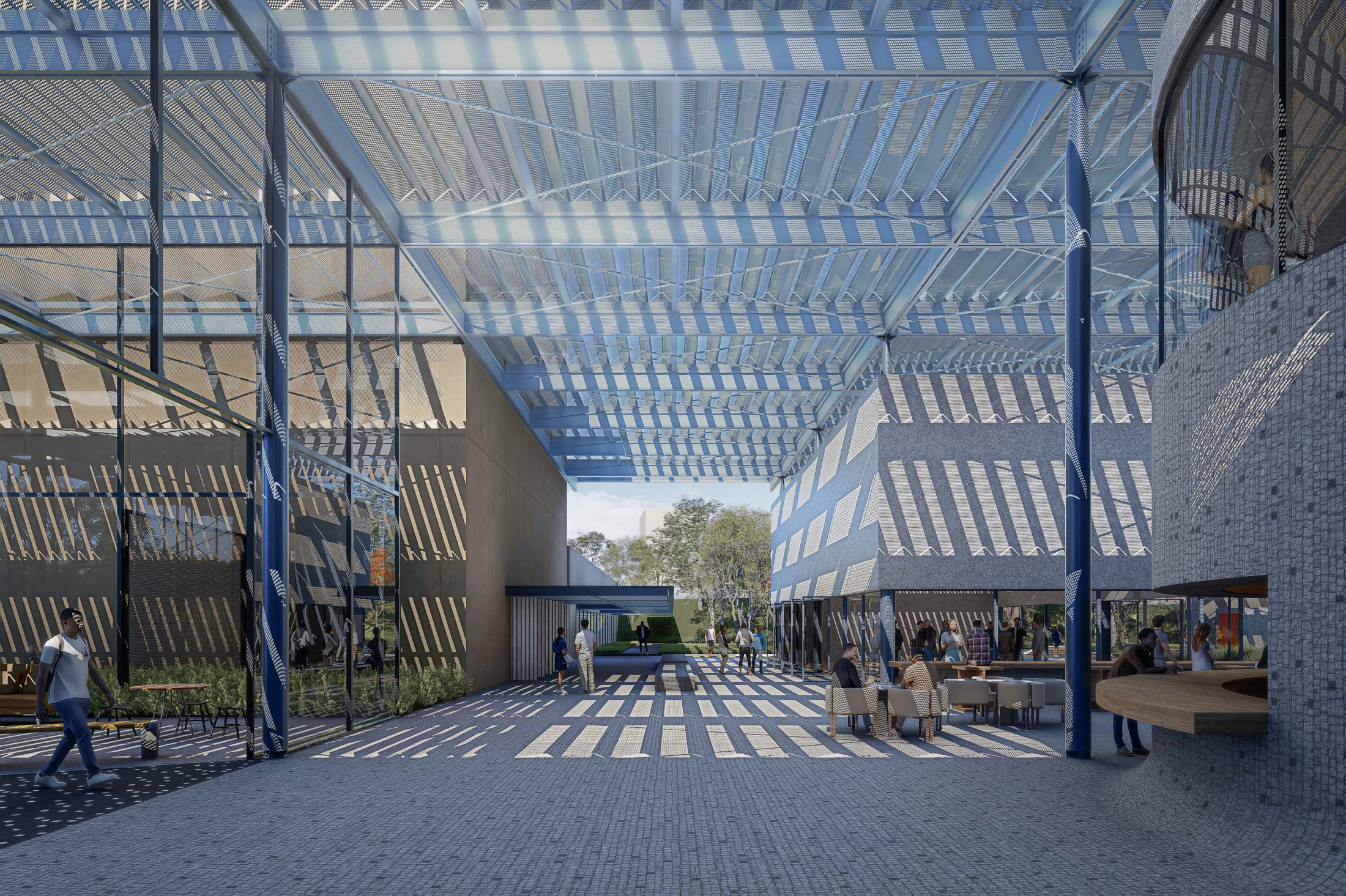
Sustainability and technology play a central role in the project. The architecture is conceived as a ‘sustainable machine,’ with solutions that minimize environmental impact and prioritize energy efficiency. The large roof of the complex is designed as protection from excessive heat and as a generator of shade that contributes to the thermal comfort of internal and external spaces. The project integrates systems for solar energy capture, reuse of rainwater, and natural lighting and ventilation, ensuring the rational use of resources. The choice of materials, such as metal structures and precast concrete, aims at durability and speed of construction, coordinated as rational, compatible systems that are essential for a construction of this scale and complexity.
Finally, the architecture of the Unit Park – SESC Mogi das Cruzes seeks to enable the active participation of the public in versatile and welcoming spaces. Gradual transitions between interior and exterior offer broad possibilities for appropriation, aiming at coexistence and social and environmental dialogue. More than a building, it expresses the institution’s commitment to building a more inclusive and sustainable society, where coexistence, learning, and well-being are fundamental: a ‘human garden,’ an essential symbol of the urgent socio-environmental integration required and a mediator between our culture and our nature.